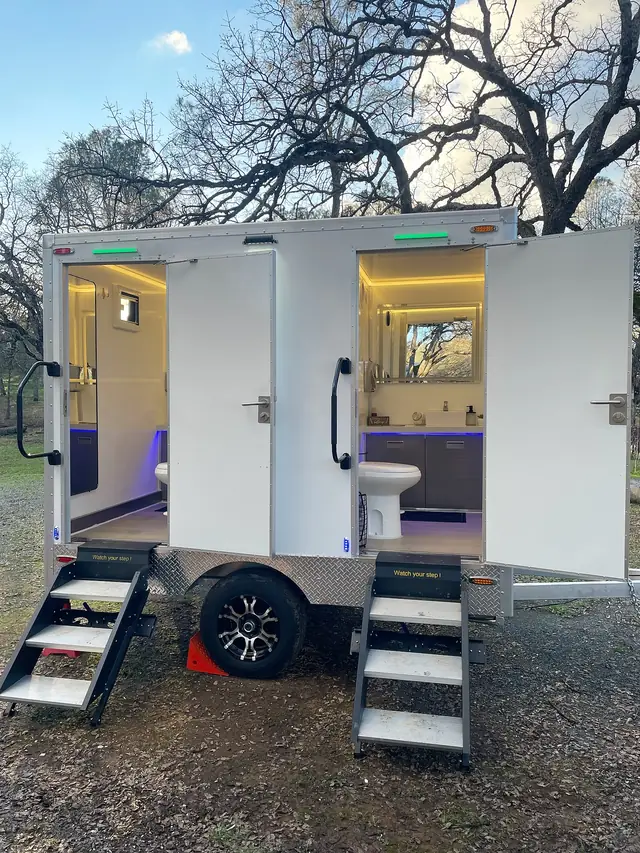
What is the main difference?
The main difference is comfort versus flexibility. A restroom trailer gives flushing toilets, running water, lights and A/C but needs a 110-volt outlet, a garden hose and about 16 by 8 feet of level ground. A porta potty needs no hookups and fits a 4 by 4 foot spot almost anywhere.
Side-by-side comparison
| Porta potties | Restroom trailer | |
|---|---|---|
| Flush | Standard: no; deluxe: foot pump | Porcelain flush |
| Water / power | None | 110 V outlet + hose |
| Space | 4×4 ft each | 16×8 ft + 10-ft lane |
| Guest feel | Outdoor | Indoor bathroom |
| Best for | Parties, jobsites, remote sites | Weddings, formal events, VIP areas |
| Wrong for | Black-tie events without upgrades | Remote sites with no power, steep or soft ground |
How many of each do I need?
One two-stall restroom trailer serves about 100 guests for 5 hours. The same 100 guests need about 3 standard porta potties at 5 hours, or 4 with a bar. Many events mix both: a trailer near the reception and standard units near parking.
Which costs less?
Porta potties cost less. A standard event unit starts at $175 in Carlsbad, so three units start at $525. A restroom trailer is quoted per event and costs more because of its size, hookups and setup. See the cost guide.
What is the middle option?
The middle option is a VIP luxury single restroom or a deluxe flushing unit. Both flush and include a sink, and neither needs water or power hookups. They suit ranch weddings and backyard events where guests expect more than a standard unit but a trailer cannot reach.